Humanity returns to deep space with Artemis II
News April 19, 2026, Comments OffAfter more than 50 years since the Apollo era, humanity has officially returned to deep space with NASA’s Artemis II mission. The mission marked the first time astronauts traveled around the Moon since Apollo 17 in 1972, signaling a major step toward renewed lunar exploration.
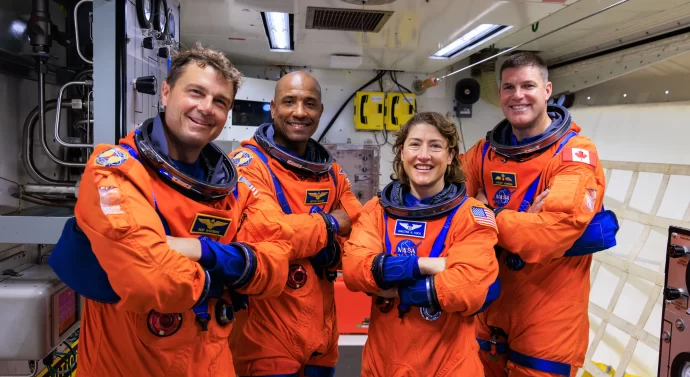
Launched on April 1, 2026, Artemis II carried four astronauts aboard NASA’s Orion spacecraft on a historic journey around the Moon and back to Earth. The crew included Reid Wiseman, Victor Glover, Christina Koch, and Canadian astronaut Jeremy Hansen. Together, they traveled farther from Earth than any humans in history, reaching a distance of more than 250,000 miles.
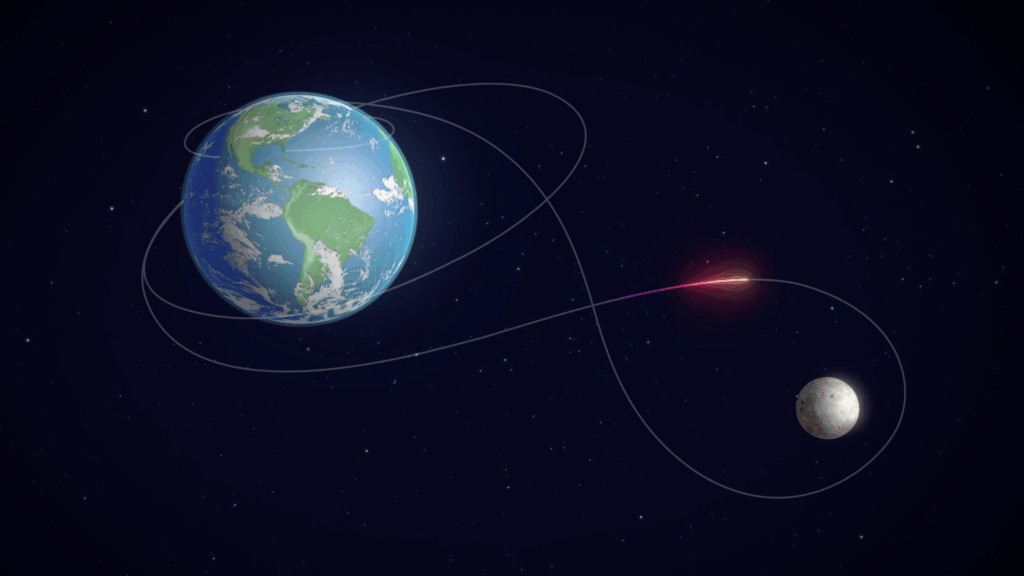
The mission lasted approximately 10 days and tested critical systems needed for future lunar landings. Unlike the Apollo missions, Artemis II did not land on the Moon. Instead, its main goal was to verify that the Orion spacecraft and Space Launch System could safely support astronauts during deep-space travel.
During the mission, the crew performed a flyby of the Moon, including passing around its far side: a region not visible from Earth. This allowed NASA to gather important data on navigation, communication, and life support systems. The mission also demonstrated international collaboration, as Hansen became the first non-American astronaut to travel to the Moon.
Broadly, Artemis II made history through its crew. Koch became the first woman to travel beyond low Earth orbit, and Glover became the first Black astronaut to participate in a lunar mission. These milestones reflect NASA’s goal of making space exploration more inclusive.
After completing their journey, the Orion spacecraft re-entered Earth’s atmosphere at extremely high speeds, enduring intense heat before deploying parachutes. The capsule safely splashed down in the Pacific Ocean off the coast of California on April 10, 2026, where recovery teams quickly retrieved the crew.

The mission is considered a major success, proving that NASA’s systems are ready for the next phase of exploration. Engineers will now analyze data from the flight, including the performance of Orion’s heat shield and onboard systems, to prepare for future missions. Artemis II serves as a foundation for upcoming missions, particularly Artemis III, which aims to land astronauts on the Moon. NASA’s long-term goal is to establish a sustained human presence on the lunar surface and eventually use the Moon as a stepping stone for missions to Mars.
Overall, Artemis II represents a turning point in human spaceflight. It bridges the gap between the achievements of the past and the ambitions of the future, showing that humanity is once again capable of traveling deep into space, and that the return to the Moon is a reality in progress.
Author
