Mourning and momentum in an age of political violence
Campus, Politics October 29, 2025, Comments OffOver a month has passed since rightwing influencer Charlie Kirk was assassinated, and still, tensions remain high around what both political parties describe as a deeply symbolic death. College campuses not dissimilar from Drury University provided the landscape of political debate where Kirk engaged. The dialogue continues both internally and externally with the Drury University College Democrats and Drury’s new conservative organization, Young Americans for Liberty.
The former president of Drury College Democrats, Rachael Elliott, said that “some of our members feel this should be a wake-up call to the Republican Party that gun violence is hurting people. Other [members] say this is horrific, above politics. They say it’s horrible, just like Gaza or school shootings.”
Student leaders in both of the politically-oriented campus organizations indicated that Kirk’s assasination is not an isolated incident of violence. Domestically, Pew Research reports that 85% of Americans believe political violence is increasing. While Americans face their fears of clashing political opinions, they also watch abroad as the situation in areas like Gaza remains contentious amidst an unstable ceasefire deal.
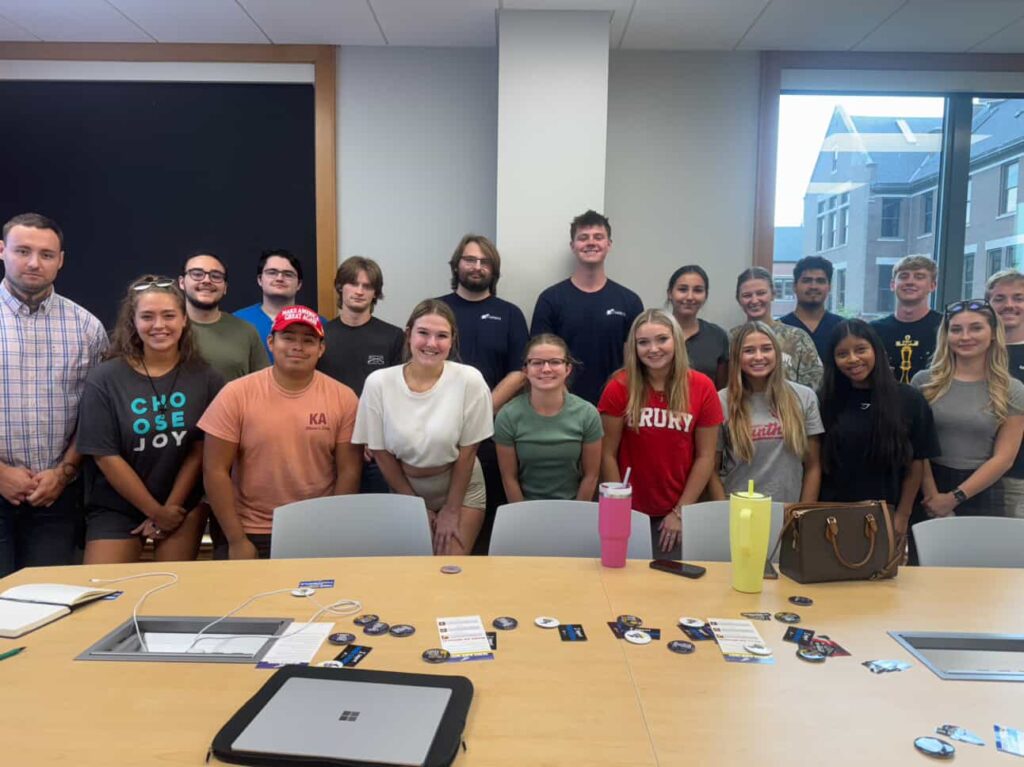
“I certainly didn’t agree with [Charlie Kirk] on everything. I felt myself distancing myself from [Charlie Kirk] as the war in Gaza raged on,” said Grant Givens, the president of Drury’s Young Americans for Liberty. Although popular conservative reporter Tucker Carlson claimed that Kirk privately shifted towards an isolationist and critical position of Netanyahu, politicians like Ted Cruz have shared that Kirk was deeply concerned with rising anti-semitism. It is not abundantly clear if Kirk truthfully found himself distancing from the general pro-Isreal assertions of the GOP, and in public settings, Kirk frequently defended Israel’s actions in Gaza.
In tandem with the ongoing crisis abroad, the assination of Charlie Kirk domestically echoes the politically motivated shootings of Minnesota Democratic state Sen. John Hoffman, his wife, and the murder of Democratic state Rep. Melissa Hortman and her husband. After the two isolated incidents occurred and Minnesota’s largest manhunt in state history ensued, Vance Boelter was found with a “hit list” of 45 Democrat officials. Boelter’s deeply premeditated rampage is what the United States Attorney’s Office described as a targeted “reign of terror.”
Although Trump claimed he was never asked to lower the flags for Rep. Hortman, he also immediately indicated that calling Minnesota Gov. Walz would be a “waste of time,” perhaps an indication of a continued resentment following their battle last November for the White House. Still, President Trump was quick to condemn the act of violence on social media, stating “such horrific violence will not be tolerated in the United States of America.” Trump and the GOP’s vastly different response to the acts of political violence has been widely criticized, however.
The Left points to the following key Republican reactions to Kirk’s murder: a moment of silence in Oklahoma schools and on the Senate floor, Kirk’s casket being transported on Air Force 2, and a Trump-designated “National Day of Remembrance for Charlie Kirk.” Now, over a dozen GOP senators have requested that Kirk be memorialized with a statue in the proposed National Garden of American Heroes near Mount Rushmore.
The Left has criticized this outpour of support for Kirk as excessive and as a demonstration of selective empathy, further drawing the distinct party lines that divide Americans. The Right asserts that the extreme actions of Tyler Robinson in September require an appropriate reaction, one of honor and respect for an individual they claim was merely exercising free speech. Now, a month after Kirk’s remains arrived in Arizona, we are left to consider the dueling, ascribed identities of Charlie Kirk; was he a Christ-first advocate of free speech or a hateful mouthpiece of white supremacy?
On the topic of selective empathy, Givens explained that, “Washington is not a fair place at times. I find myself disagreeing with the GOP on a daily basis, but I will say that political violence is much more prevalent among left-wing groups.” Democrats leader, Rachael Elliott, responded to the Right’s frequent claims of Left-wing radicalism, saying, “…quite frankly, it doesn’t matter which side of the ideological spectrum [the shooter] is from. Somebody killed somebody, and that is a problem. It doesn’t fall in the party lines.”
National studies indicate widely varying results on who is the primary contributor to political violence, but the Center for Strategic and International Studies cites that Left-wing terrorism has increased over the last year. The Center claims that over the last thirty years, political violence from the Right has been dominant, but this year marks a shift and increase in the Left’s violence.
Grant Givens continued by explaining the heightened stakes that he believes are contributing to these attacks in our current political climate. “One thing I noticed during the election is that the media tried to portray conservative values as white supremacism. The justification for murder is that you are a nazi…Calling a moderate conservative like Charlie Kirk a nazi is asking for him to get murdered,” he said.
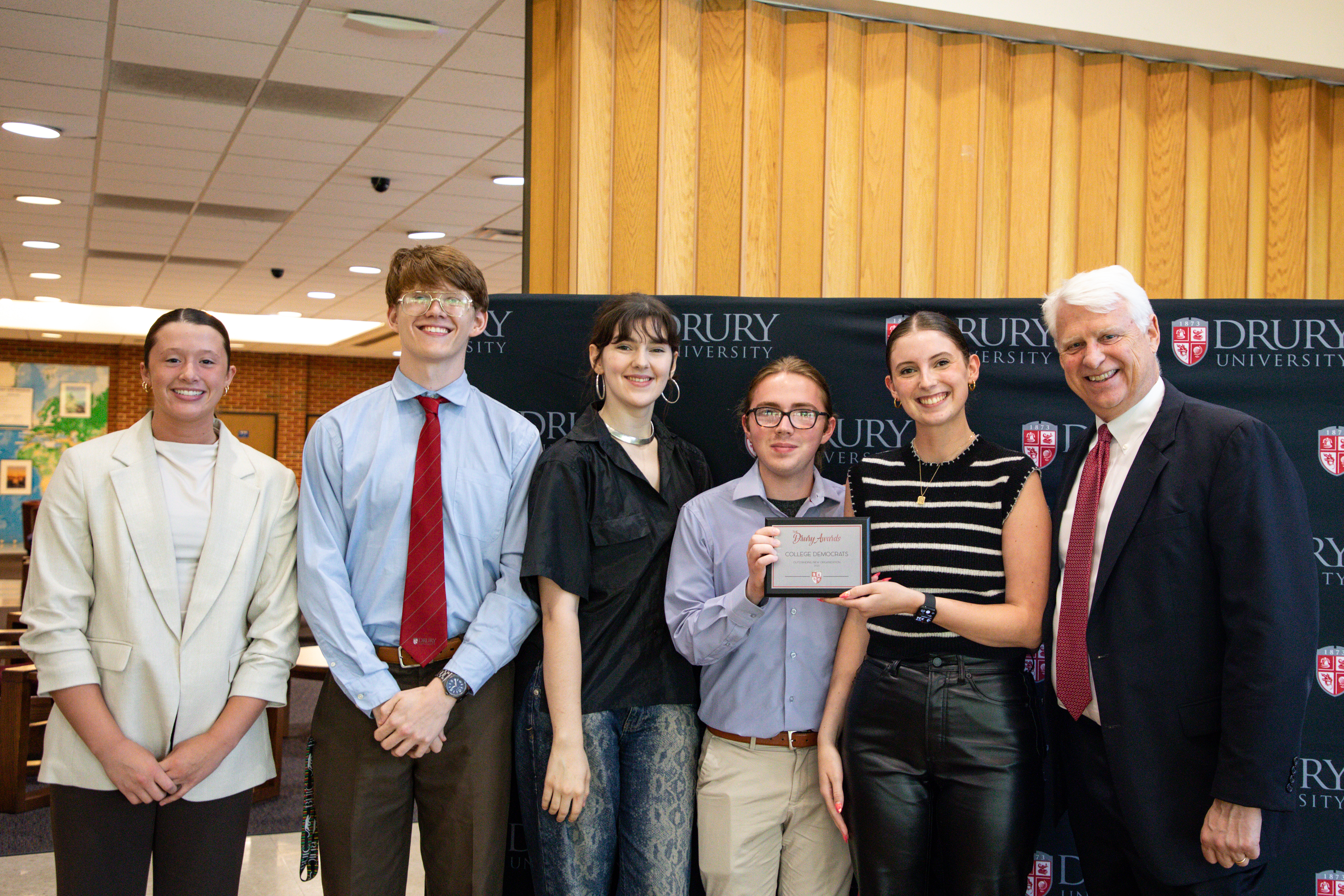
Rachael Elliott expressed the significance of bipartisan support of free speech in our current political climate. “With both organizations, [us] and Young Americans for Liberty, it needs to be made clear that students can…have a safe space to share their opinions regardless.” Givens noted both the nuanced need for unity in this time as well as the challenges in approaching less divisive party-driven rhetoric. “If we can’t become unified in not murdering our political opponents, I don’t know if we can find unity.”
If you are a Drury student looking to express and explore your political opinions, the Young Americans for Liberty meets every Wednesday from 5pm-6:30pm on the second floor of the Olin Library. The College Democrats meet each Wednesday at 8pm in OEC 300.
Note: Author is an executive member of the University’s College Democrats organization.
Author
